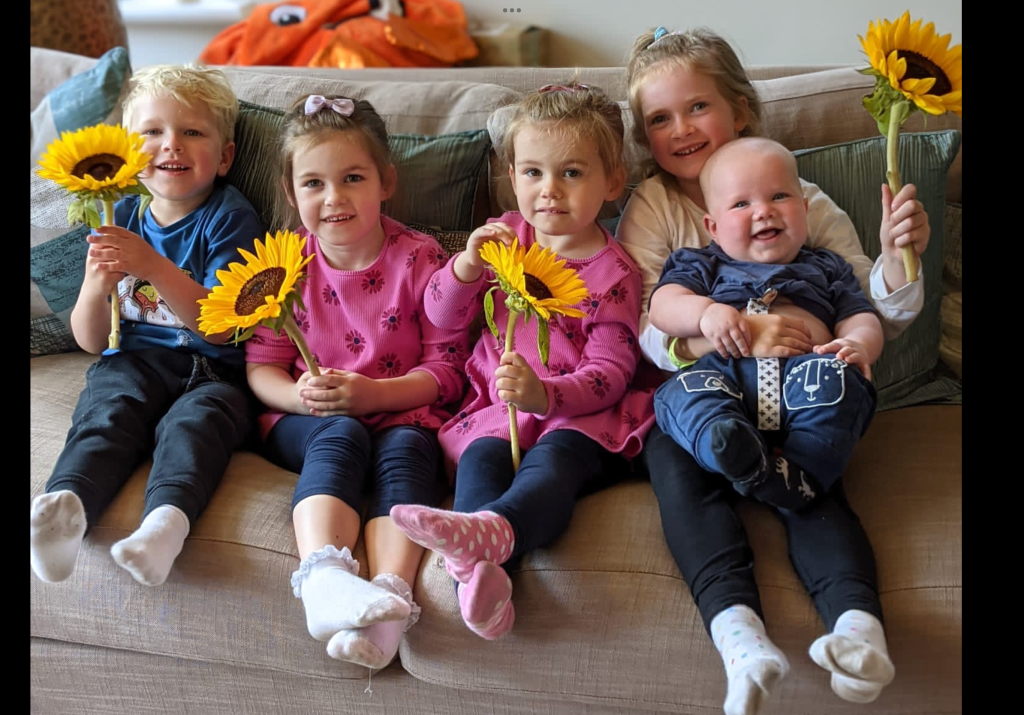
Young children possess a beautiful innocence and translucency. One can almost see straight into their heart at times. And equally, they look out on the world with such openness, trust and illumination.
I am blessed with five gorgeous grandchildren and have had the pleasure and delight of having them all in one place this past week. Normally they are scattered geographically so it has been a real treat to see them play and interact together in our home and garden over these days and to feel the warmth and love flow.
During the time of the pandemic we, along with half of the country, decided to try to grow our own vegetable garden. We bought a plastic greenhouse tent and put it in the middle of our back garden and this was where our veggie seeds germinated and developed their early shoots and roots before being planted out in the open air once the weather warmed up. When the grandchildren visited, they enjoyed helping me to water the little pots and tend to the seedlings. The temperature in the greenhouse tent soared on warm days so we left the door flap open at times. One day, once the plant-tending had been taken care of, we exited the tent and my then 5 year old little granddaughter turned around and said to me, ‘zip it, grandma!’ Of course she was referring to closing up the tent flap. We found it quite funny at the time. Such innocence.
Children say simply what they see. We as adults tend to warp words, sometimes twisting their meaning in the name of humour. We can also make authentic emotional expression so complicated rather than clear.
As I think of that greenhouse and those germinating seedlings, it reminds me of how our little humans also need to be nurtured with loving, close, gentle care especially in their early years. A secure connection with caregivers is so helpful towards healthy development. A bond where the child feels consistently seen, heard & loved and where a true sense of belonging and safety is established. Another basic need of a young child and indeed of any human is to be able to express themselves authentically and to still feel loved and accepted. Nowadays there is so much talk within the wellness industry of authentic emotional expression being a key element to long term physical health. The ability to express one’s feelings without risking rejection is a kindness we can all offer one another. Obviously there are healthy ways to do this which should never harm another person. When emotional fluidity is modelled by caregivers in the child’s early years in an environment of acceptance & safety, the child then grows a skill which breeds self-regulation, calm confidence and interconnectedness in years ahead.
Children are like sponges and soak up loving connection like living water. With this, they thrive. They can enjoy experiences and build a solid sense of themselves. Children also absorb the feelings around times of grief, disharmony, friction and division within a family. Little ones watch us more intently than we realise and in the early years their world is shaped by what they experience of us. We inadvertently convey all the parts of ourselves, and our own flaws and foibles leak through in the process. No normal family climate is ever perfect. Life is messy. We are human after all! It’s what we do in the tumultuous times and how we respond (or react) to troubles that models how our little people process it in relation to themselves. Too easily, they can assume family discord is their fault, especially if their own emotional expression is shut down or pushed away by adults. This can impact how they manage both their inner and external world in years to come.
In a powerful scene from the film Good Will Hunting, there is tremendous deep emotional release that comes when Will (Matt Damon) is told by therapist Sean (Robin Williams) regarding the trauma he suffered as a child – ‘it’s not your fault’.
All this to also say, our little ones grow in the soil where they are planted and they can flourish in the toughest of conditions too. Oftentimes, difficult circumstances can be the making of a young person and can produce a kind of resilience that wouldn’t have come about in any other way. I say this from personal experience. Fractured and blended families produce their own kind of challenges and blessings. Children are very adaptable and neuroscience is now proving that even adult brains are neuroplastic and can always learn new ways of processing and functioning. This is amazing and also very hopeful.
They say, ‘It takes a village to raise a child’ and there is some truth and wisdom in that. True collective and community care in action is a beautiful thing. In times of old, the extended family was much more involved in nurturing their children than they are today. By the very nature of society’s structure nowadays, we often have to rely on strangers to input into our children whilst parents are at work etc. Thankfully there are some amazing nurturers who have no experience of being biological parents yet have the empathy and intuitive skills to really connect with kids and instil so much goodness, love and self-belief in them.
I look back fondly to the times when my own three boys were young. Although life was extremely busy, it was also joyous and messy and full of action, laughter, play and adventure. We have many photo albums which bulge with tales of family life together over the years. We also had wonderful friends who invested their time into our boys and became part of our family tapestry. The boys grew up feeling comfortable and connected around our people – our extended family.
As I reflect on my times around my own grandchildren now, I am reminded of the unclouded ways in which they ‘do’ life. The simple joys in outdoor play, natural curiosity, being silly, laughing and just being present in an easy, trusting, uncomplicated way.
I want to recapture elements of that ease in my own life too. And the beauty is, we are never too old to do that.
*******
 Everythingistickityboo
Leave a comment